
The Mac and Marla Barr Woodland Garden
The Idea Sprouts
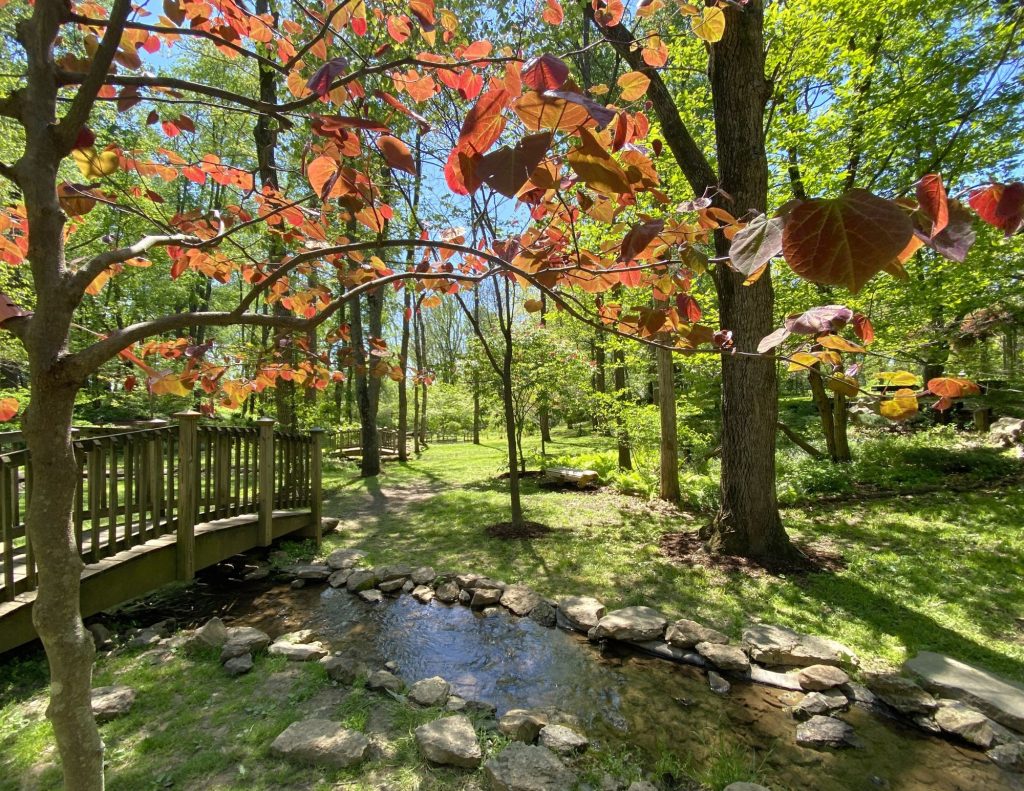
In August 2010, a two-acre section of the forest was selected by Tavia Cathcart Brown, Executive Director, as the site of the future Woodland Garden. Invasive plants were removed, and the ground was prepared with wood chips prior to being planted. Eagle Scouts helped to build paths, benches, and arched bridges.
The stream, waterfall, pond, and bog were added as centerpieces of this beautiful garden. It is maintained by staff and volunteer gardeners.
The Garden Takes Shape
Highlighted as part of the Kentucky Garden Trail. Our Mac & Marla Barr Woodland Garden is 1 of 12 gardens on the trail. We hope you will stop by to visit and pick up your stamp, and if you haven’t gotten one already your passport. Used to keep track of all the gardens you visit on the trail. Learn more here.

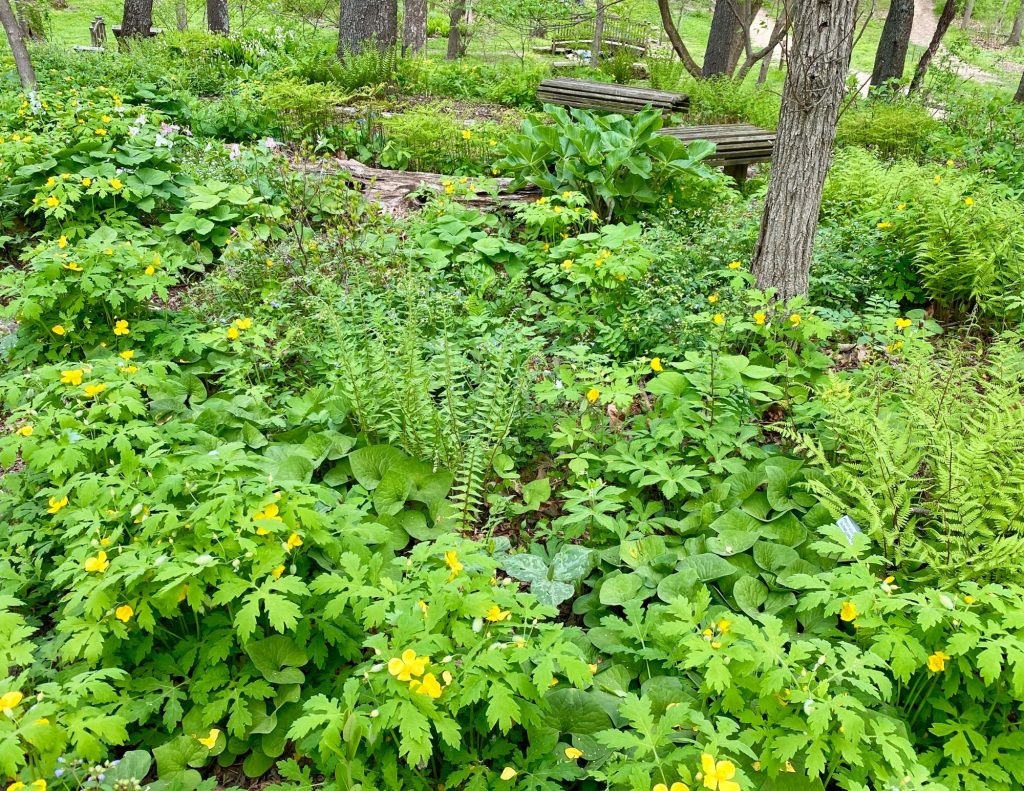
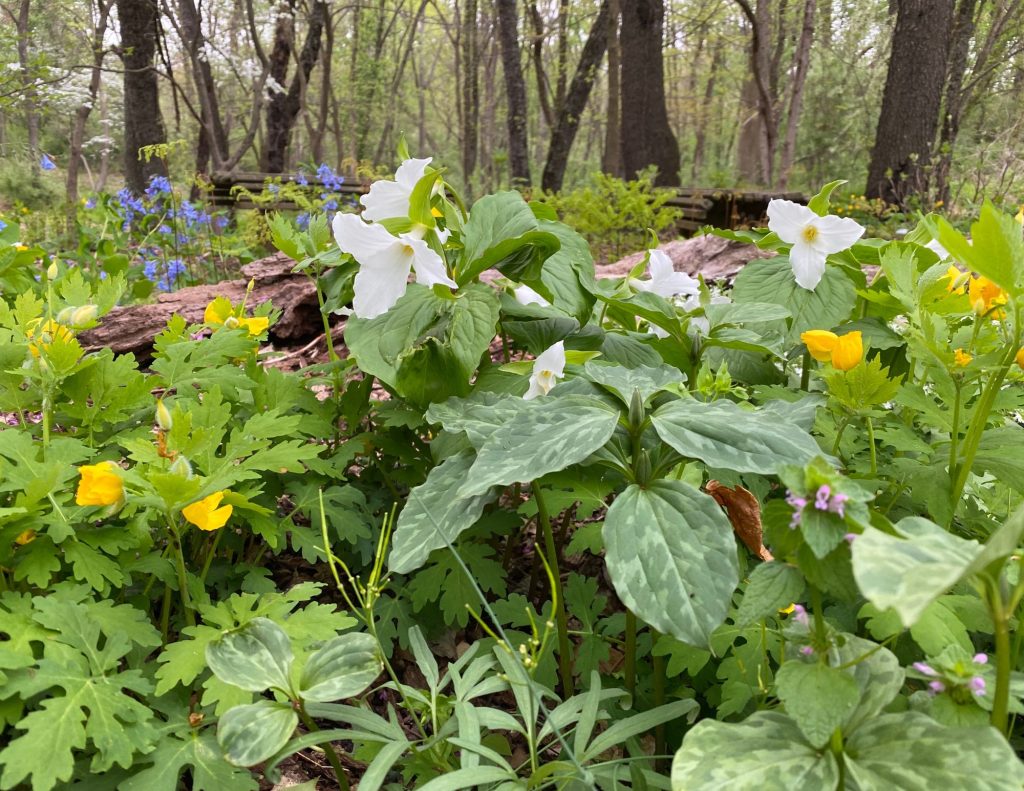
A Woodland Garden is a layered garden. Rising from decaying leaves and rich soil are thousands of colorful wildflowers, ferns, and shrubs. The delicate understory tree layer gives way to the tallest, multi-branched canopy that filters sunlight and shades the forest beneath.
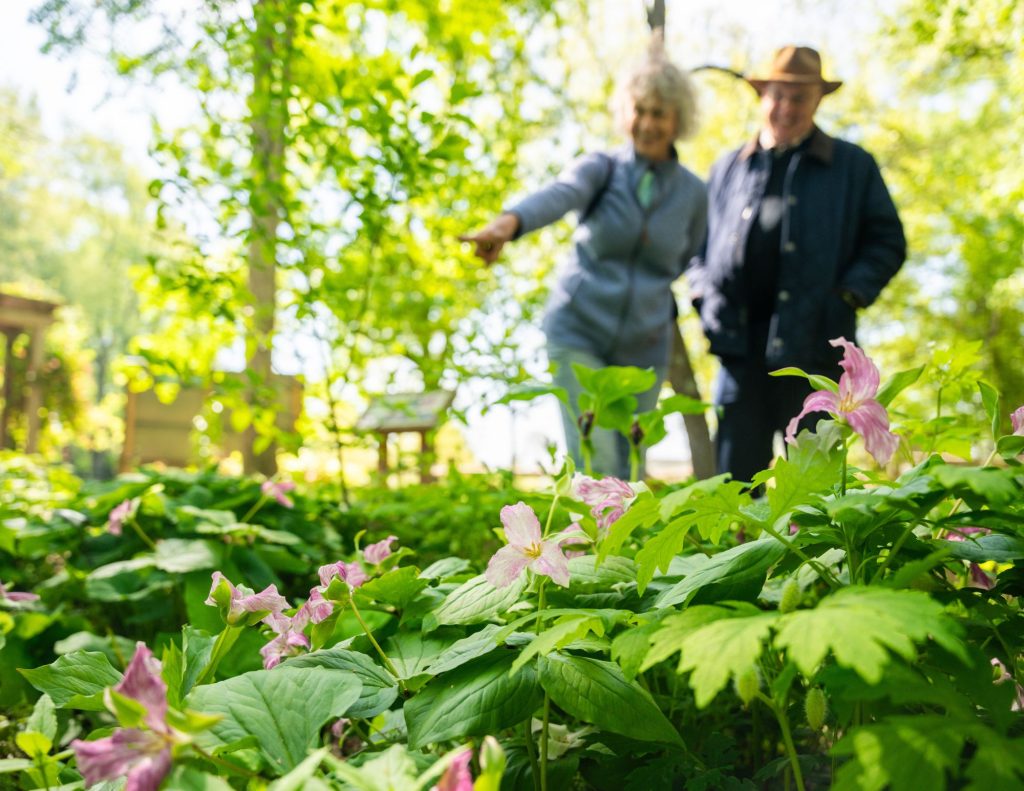
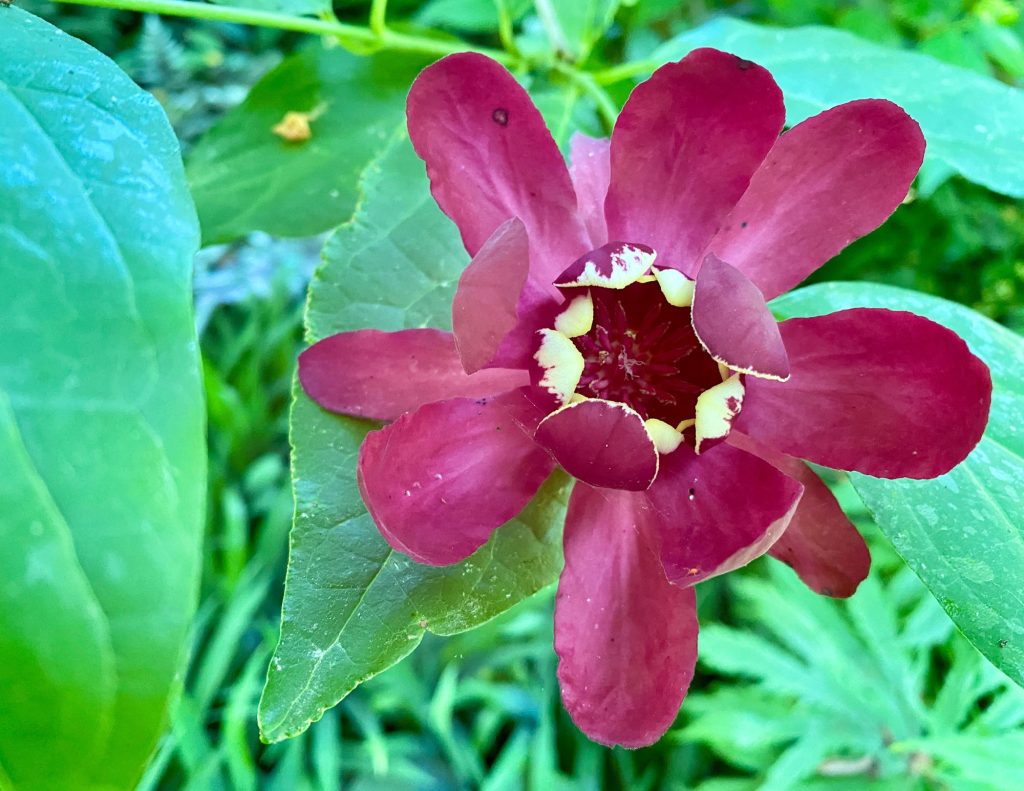
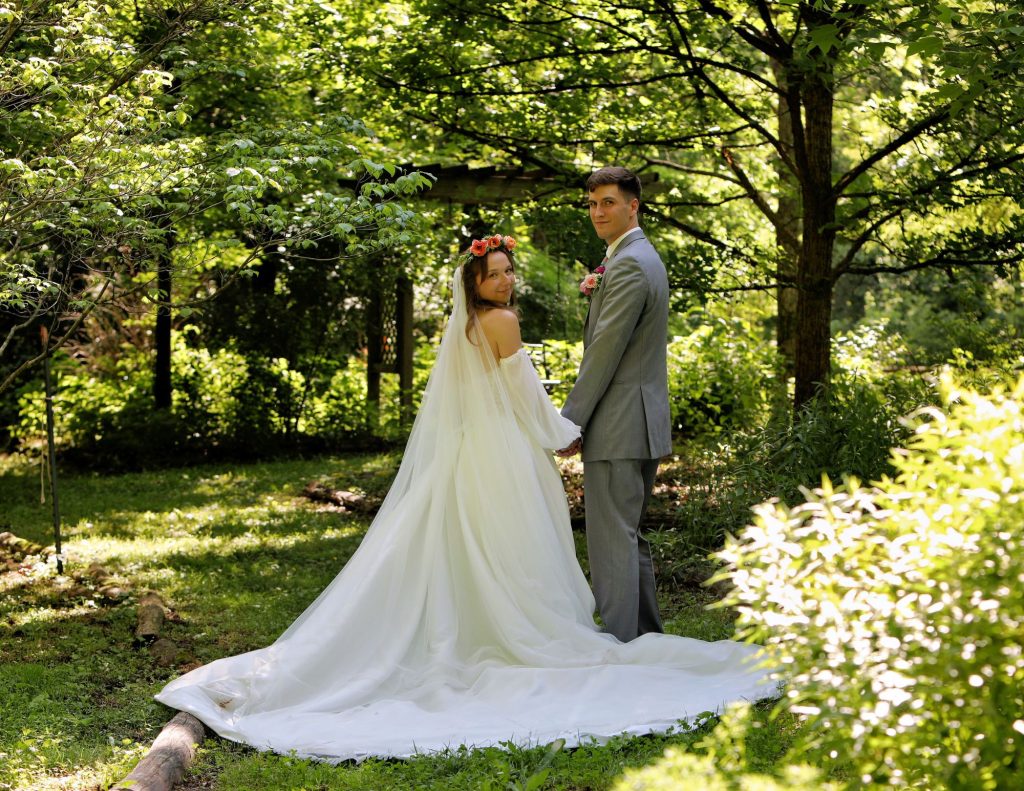
This inviting and picturesque garden was designed to emphasize the diversity and beauty of Kentucky’s wildflowers and ferns not often seen in their natural habitats. The Woodland Garden features a shaded section and a sunnier section, with more than 400 wildflowers, ferns, shrubs, and trees, emphasizing native plants that grow well in our region. It is a true beauty used as a demonstration garden, a place to sit and enjoy the flowers, and as a place for weddings and celebrations, including the Butterfly Ball.
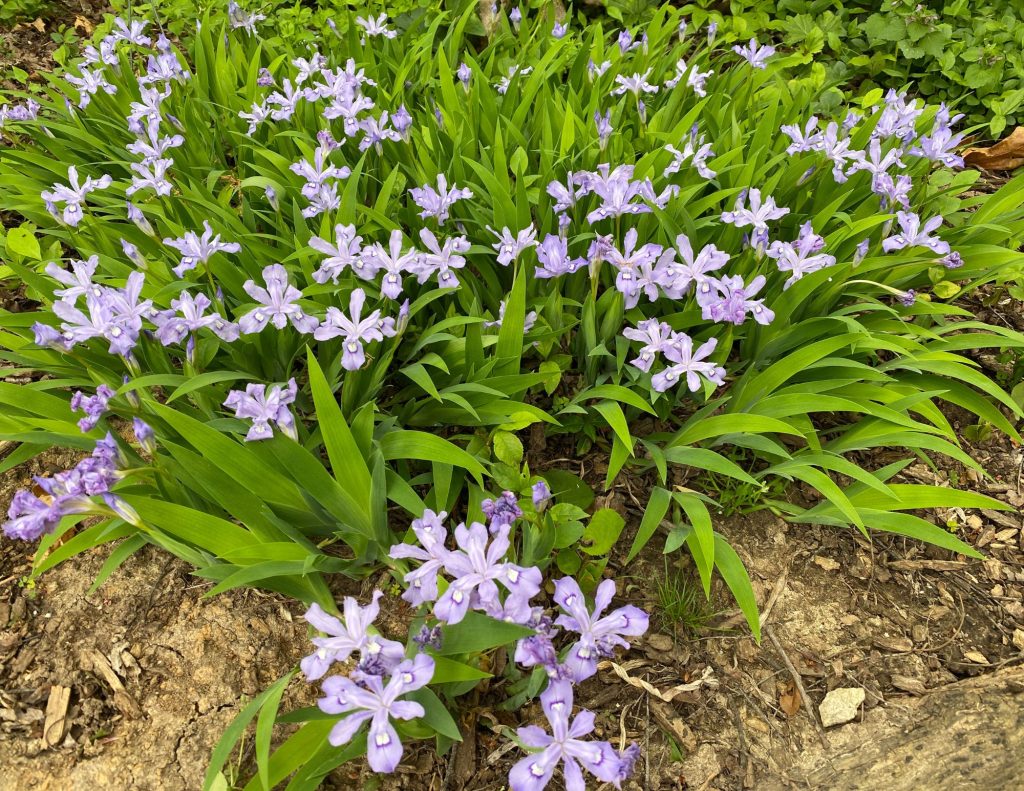
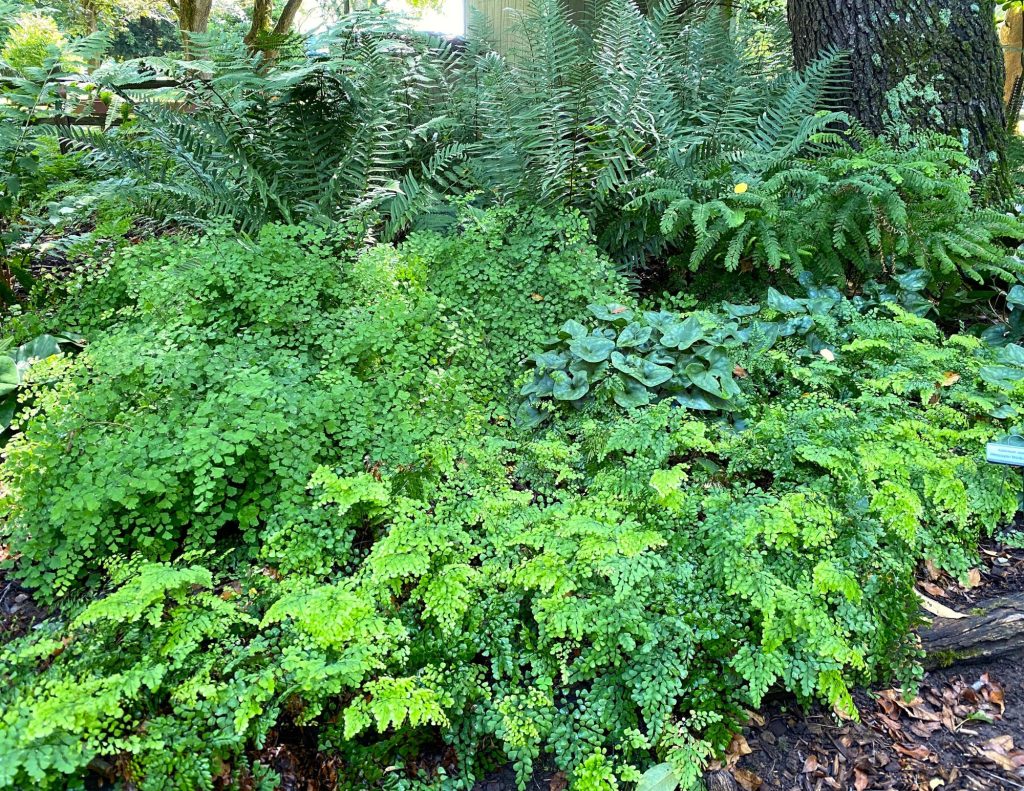
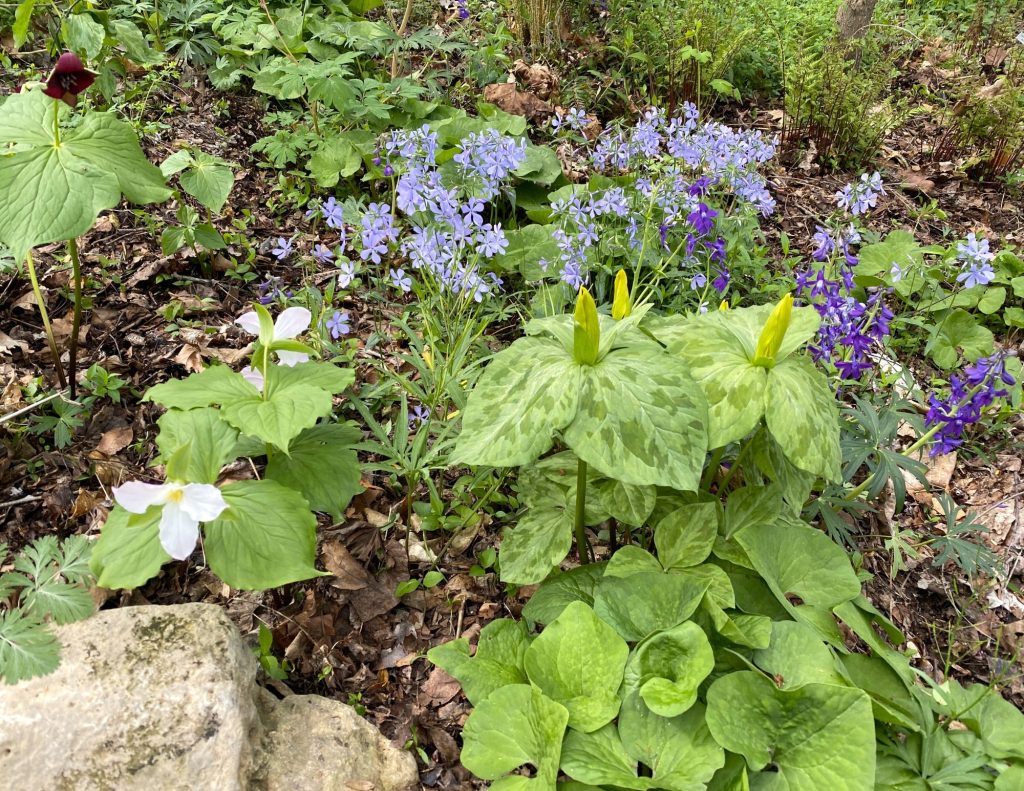
The shaded garden section’s peak bloom occurs between March-May, during which a visitor may see colonies of Virginia Bluebells, Dwarf Larkspurs, Foamflowers, many species of Trillium, Anemones, Bleeding Hearts, Lenten Roses, a spectacular variety of Ferns, and many more.
The sunnier garden section (on the north side of the creek) is a Certified Monarch Waystation, featuring native Milkweed species as host plants, along with nectar plants, such as a wide variety of Coneflowers, cold-hardy Hibiscus, Ironweed, Joe Pye Weed, and plenty more. The peak bloom time is between July-September.
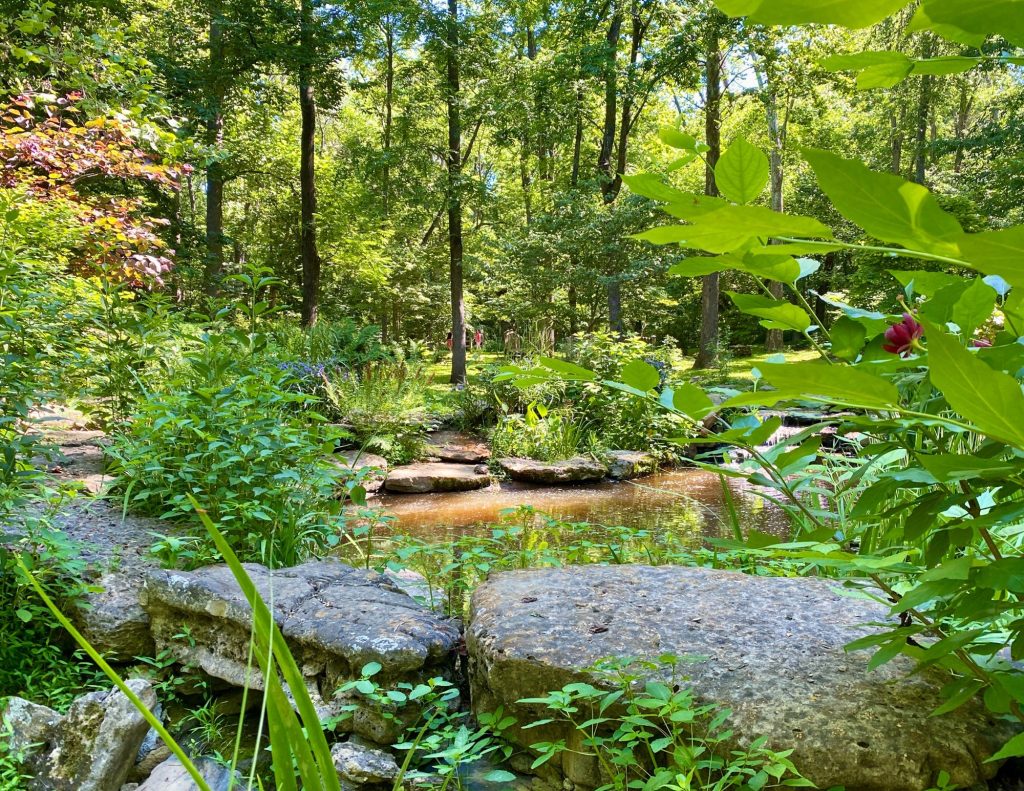
Adding to the peaceful setting of the Woodland Garden is a meandering creek, which divides the shade garden from the sunnier side. Visitors may cross two arched bridges, sit by a pond, and a peat bog. Many visitors spend hours relaxing on a nearby bench or swing, listening to birds and the gentle water sounds.
















The Plantings
Mimicking a natural woodland, the Woodland Garden Team has planted over 5,000 plants with more to come.
New plantings include:
200 species of wildflowers
110 species of ferns
54 species of shrubs and trees
Groupings of plants have been identified with labels that list the scientific and common names. This helps visitors readily identify plants that may be used in home garden settings.
Favorite Plants
Bloodroot
(Sanguinaria canadensis) is an early spring wildflower with beautiful white flowers.
Wild Ginger
(Asarum canadense) serves as a luscious ground cover once established.
“Lady in Red” Lady Fern
(Athryium filix-femina) offers color and interest through three seasons.
Virginia Bluebells
(Mertensia virginica) forms colorful and pleasing colonies and brings a pop of blue and pink to the spring landscape.
Christmas Fern
(Polystichum acrosti-choides) is one of the best native evergreen ferns for the garden.
Weddings & Special Events
At all times of day and in all seasons, the peace and beauty of the Woodland Garden is captivating. People stop for a moment of serenity and to admire the beautiful surroundings. From the gardens inception in 2010, it has attracted couples for weddings.
Click here to learn more about weddings in the Woodland Garden.
Be a Garden Volunteer
We adore our garden volunteers! If you’d like to work with good people, learn about plants, and be part of a fun team, please click here or call (502) 228-4362 E-mail Info@KYNaturePreserve.org.
Education and Garden Tours
The Woodland Garden is used as part of Creasey Mahan’s educational programs. School field trips learn the benefits of native plants and how Native Americans used plants for ceremonial, medicinal, and every day uses.
Garden enthusiasts and clubs from all over the region have enjoyed guided tours of the garden. The plant labels help novice and advanced gardeners identify plants they may want to introduce in their home gardens.
Guided tours are available upon request. Please email the office to request a date.